
Care
Barbless hooks and releasing fish well
A released fish that dies an hour later counts as a killed fish. Most of the damage is done by handling, not by the hook.
Barbless loses fewer fish than anglers believe
The usual objection is that a barbless hook lets fish off. In practice it penetrates more easily and more deeply for the same strike, and if you keep a tight line the difference in landed fish is small. What changes dramatically is how quickly you can unhook and release.
You can pinch a barb flat with forceps in two seconds. Many waters now require it.
Keep it in the water
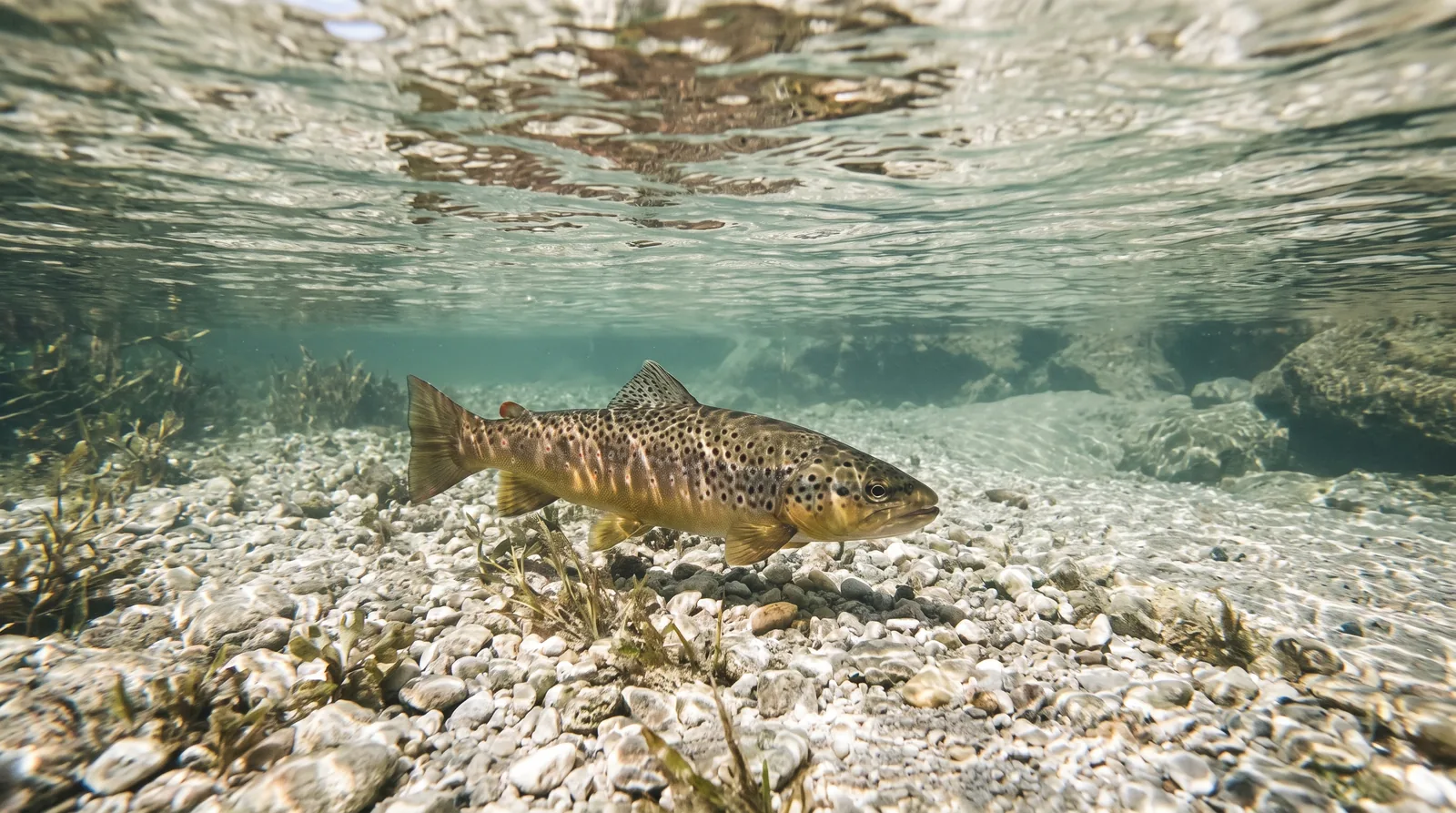
A trout out of water is holding its breath after a hard sprint. Unhook it in the net, in the water, with the fish upright. If you must lift it, thirty seconds is a generous ceiling and ten is better.
Wet your hands first. Dry hands strip the slime coat that protects a fish from infection, and a fish released without it can die days later from something that never touched your hook.
The net matters more than people expect
Knotted mesh strips slime and damages fins and eyes. A clear silicone or soft rubber bag does neither, and it does not tangle every hook in your fly. If you buy one piece of gear specifically to release fish better, buy this one.
Let it go when it is ready
Hold the fish facing into gentle current until it can hold itself upright, then let it swim from your hands rather than pushing it away. Do not move it back and forth: water only flows one way through gills, and rocking a fish forces it the wrong way.