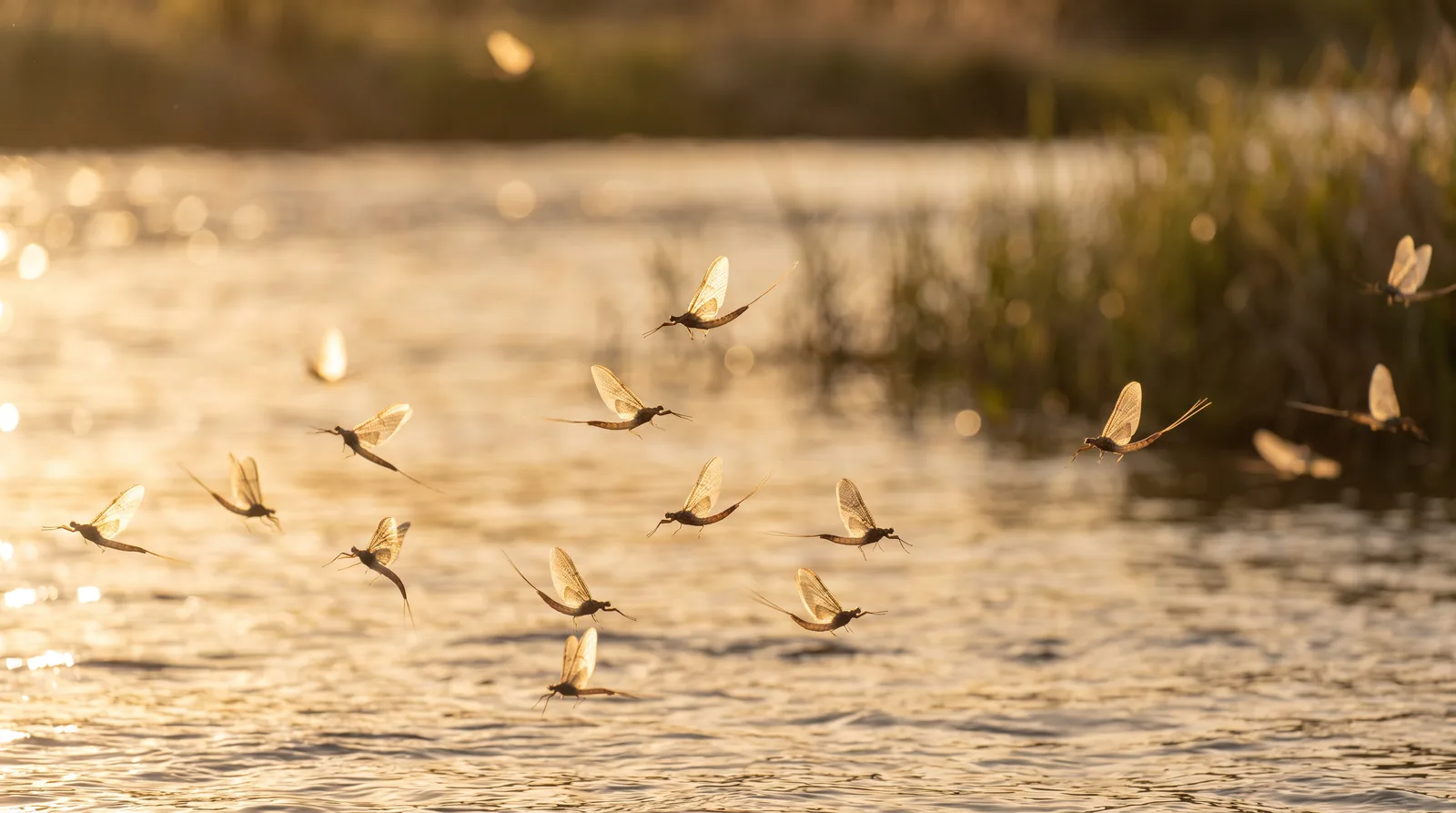
Choosing flies
Matching the hatch without an entomology degree
Three decisions, in a fixed order. Latin optional.
The order is size, shape, colour
Trout judge food in that sequence, and so should you. A fly that is the right size and roughly the right silhouette will be taken even if the colour is off. A fly that is the perfect colour and two sizes too large will be refused all afternoon.
This is good news, because size is the easiest thing to observe. Catch a natural in your hand, or just watch one drift past, and compare it to what is on your tippet.
Four groups cover nearly everything
Almost every trout fly ever tied imitates one of these.
| Group | How to recognise it | Typical patterns |
|---|---|---|
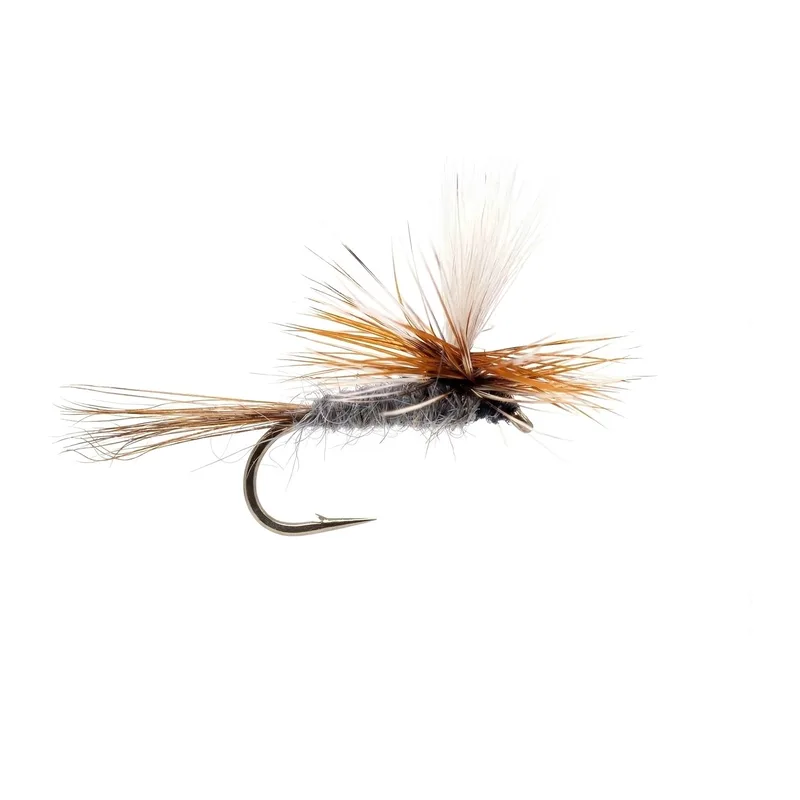
| Mayflies | Upright wings like a tiny sailboat; two or three tails; sit still on the water | Parachute Adams, Pheasant Tail Nymph |
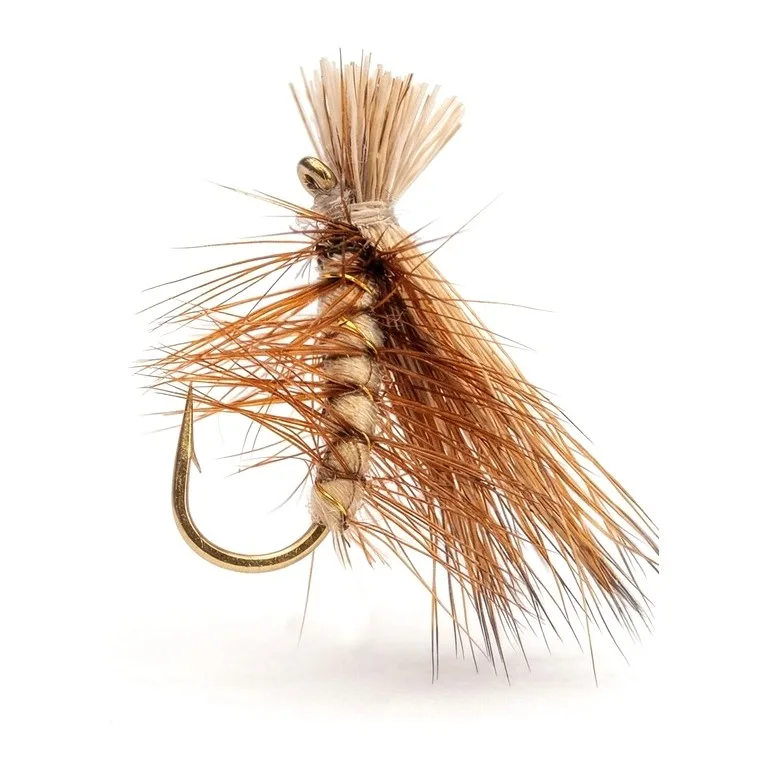
| Caddis | Tent-shaped wings; skitter and flutter rather than drift; no tails | Elk Hair Caddis |
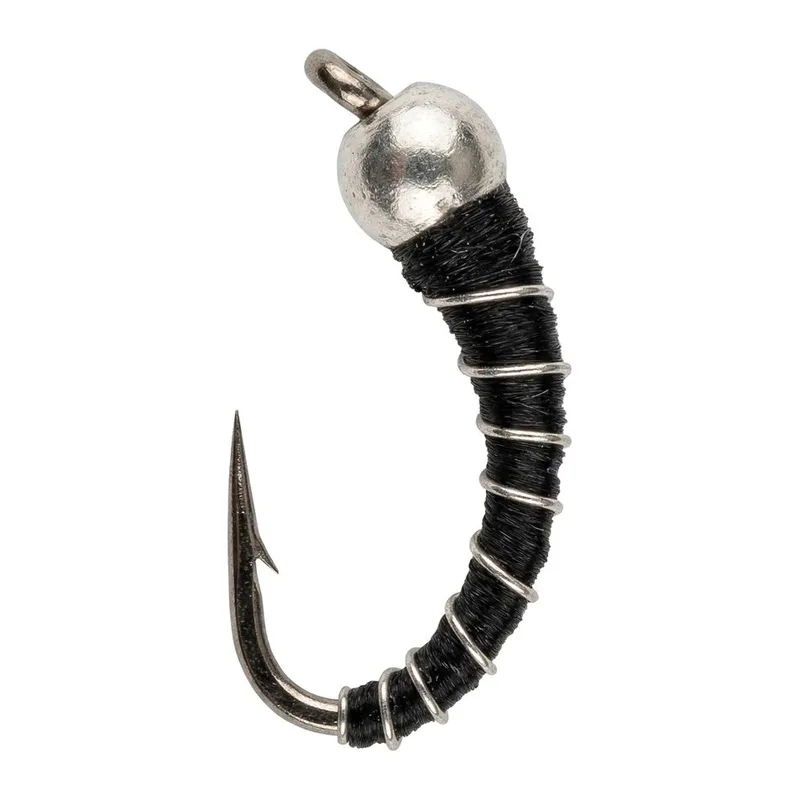
| Midges | Very small, no obvious wing on the water, present all year | Zebra Midge |
| Stoneflies | Large, two tails, crawl to the bank to hatch rather than emerging mid-river | Bead Head Stonefly Nymph |
If nothing is hatching, fish an attractor
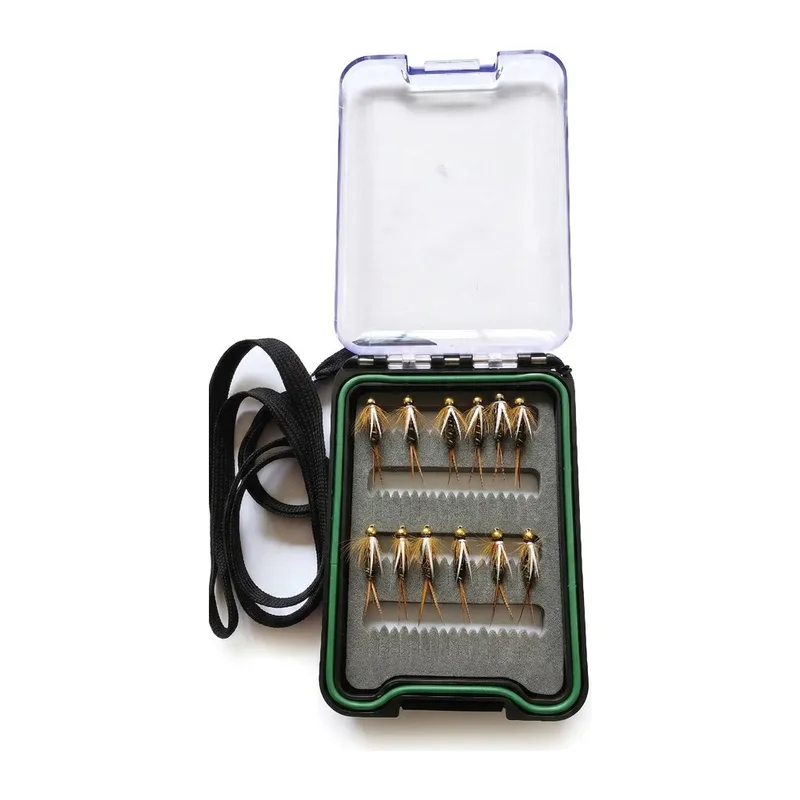
Most of the time there is no hatch to match. Fish still eat, and they eat whatever the current delivers. That is when an attractor pattern earns its place: something like a Prince Nymph, which imitates nothing in particular and suggests several things at once.
The same logic applies to terrestrials in summer. Once grasshoppers are in the grass, wind puts them on the water all afternoon, and a hopper pattern beside the bank outfishes any hatch-matching subtlety.
When fish are rising and refusing
Rises without takes almost always mean one of three things: your fly is too big, your fly is dragging, or the fish are eating emergers in the film rather than adults on top. Work through them in that order. The third is the one most people miss — a fly fished slightly under the surface when everything looks like a dry-fly situation solves a surprising number of frustrating evenings.
Mentioned above